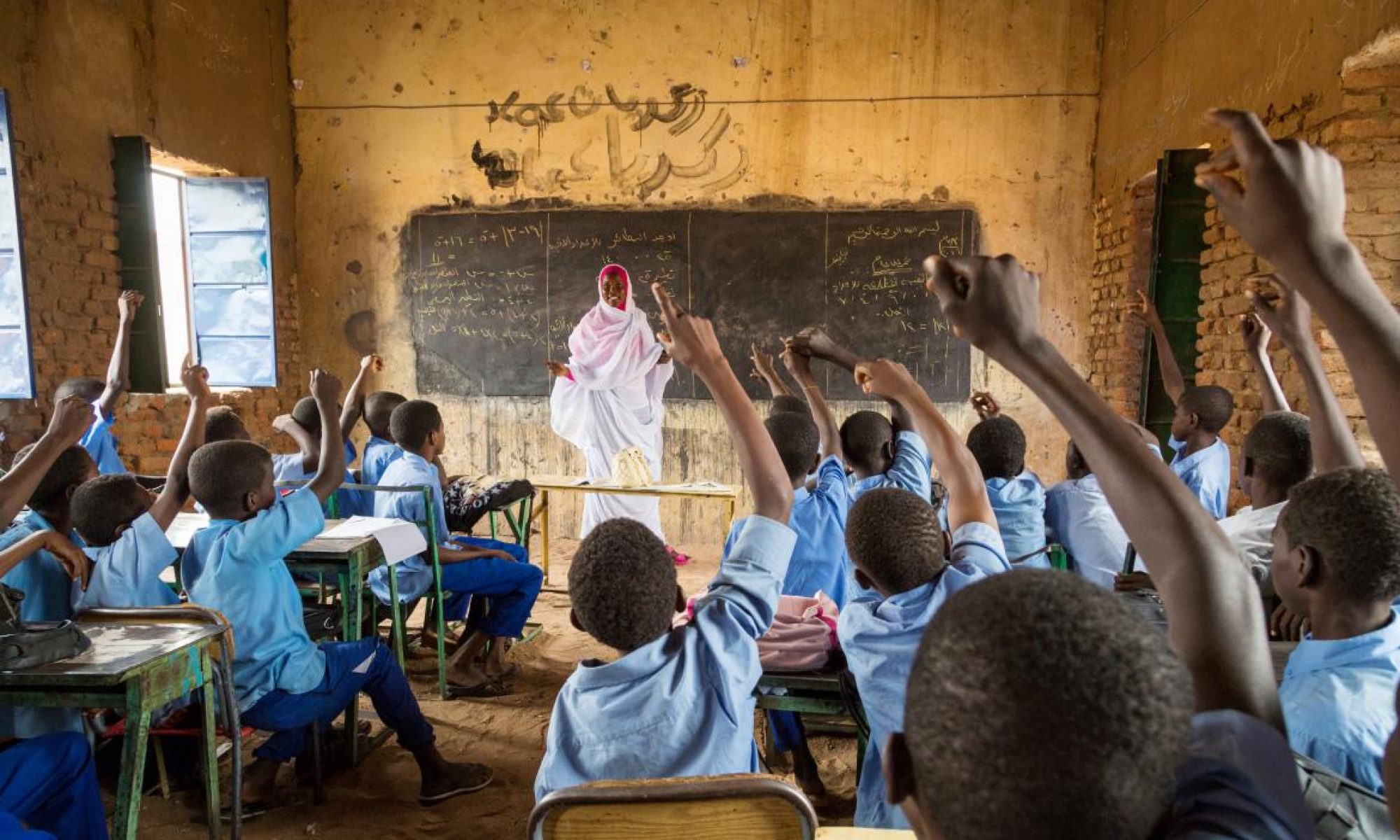

Secondary education in Sudan spans Grades 7–9 (ages 12–14) and serves as a critical bridge between primary school and high school. It is part of the compulsory education phase (until Grade 9), though enrollment drops significantly in rural areas due to poverty, cultural norms, and infrastructure gaps. The system emphasizes Arabic language proficiency and Islamic values, aligning with Sudan’s cultural identity, but this often marginalizes non-Arabic-speaking communities. Public secondary schools dominate but suffer from overcrowding, teacher shortages, and inadequate resources. Private schools, concentrated in urban centers, offer better facilities but cater to wealthier families. Recent reforms aim to modernize teaching methods and curricula, though progress remains slow, with NGOs like UNICEF supporting undeserved regions.
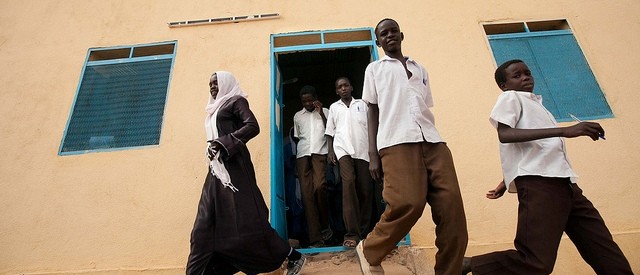
Secondary School Structure
- Grades: 7–9 (ages 12–14).
- Duration: 3 years.
- Types of Schools:
- Public Schools: Government-funded, free, but under-resourced.
- Private Schools: Fee-based, better infrastructure, and smaller class sizes.
- Madrasas: Blend formal education with Quranic teachings.
- Transition: Prepares students for high school (Grades 10–12), where they choose academic (science/arts) or vocational tracks.
- Access: Urban-rural disparities persist; rural schools often lack electricity, textbooks, and qualified teachers.
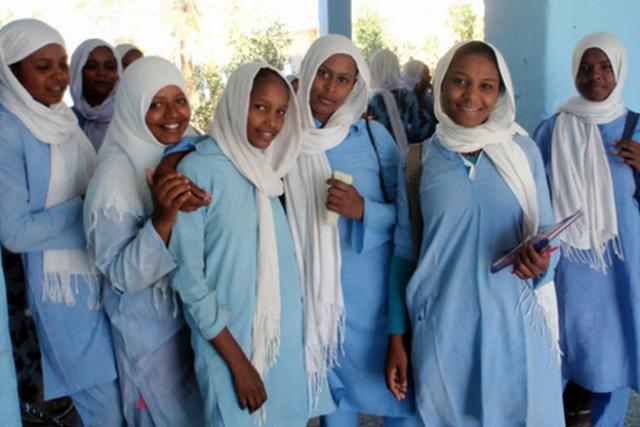
Secondary School Curriculum
The curriculum, standardized by the Ministry of Education, focuses on foundational knowledge, critical thinking, and preparation for high school. Key components include:
Core Subjects:
| Arabic Language | Advanced reading, writing, grammar, and literature. |
| Islamic Studies | Quranic recitation, Islamic history, ethics, and jurisprudence (Fiqh). |
| Mathematics | Algebra, geometry, and basic statistics. |
| Integrated Sciences | Combines biology, physics, and chemistry fundamentals. |
| English Language | Focus on reading comprehension, writing, and communication. |
| Physical Education and Arts | Sports, traditional music, and visual arts. |
Key Themes:
- Cultural Identity: Emphasis on Sudan’s Arab-Islamic heritage and national unity.
- Moral Education: Islamic ethics integrated across subjects.
- Gender Roles: Subtle reinforcement of traditional roles (e.g., limited STEM encouragement for girls).
Teaching Methods:
- Rote Learning: Dominant due to large classes and limited resources.
- Emerging Approaches: Some private schools adopt group work and project-based learning.
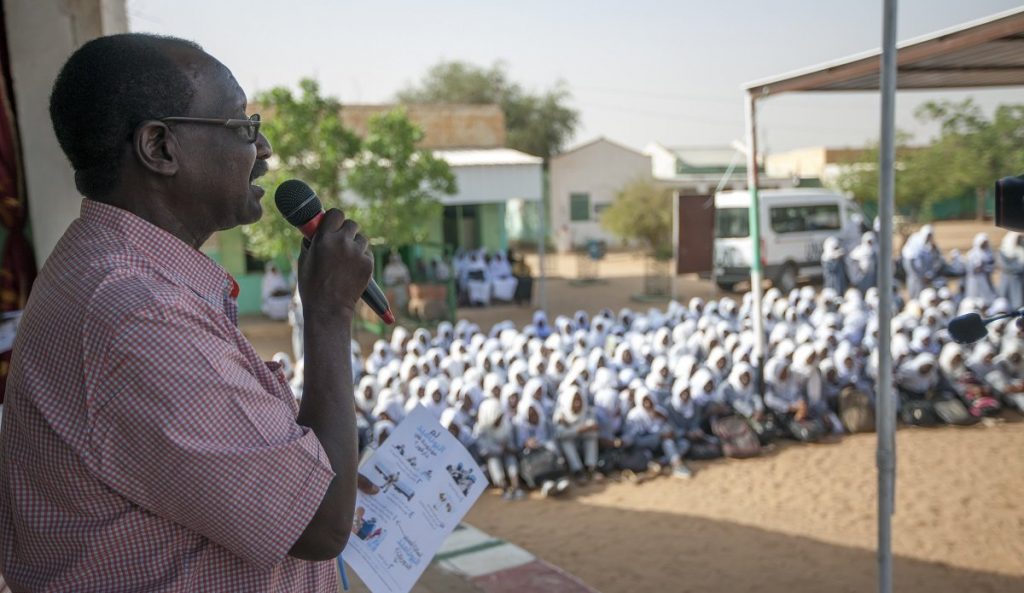
Assessment and Examination
- Continuous Assessment:
- Regular quizzes, homework, oral exams, and project evaluations.
- Focus on participation, comprehension, and skill development.
- End-of-Year Exams: School-based tests to determine promotion to the next grade.
- Transition to High School: Performance in Grade 9 influences stream selection (academic/vocational) for high school.
- No National Exams: The first high-stakes exam is the Sudan School Certificate (SSC) at Grade 12.
Challenges:
- Inconsistent grading standards.
- Rural students often under perform due to resource gaps.
Key Points to Note
- Language Barrier: Arabic remains the sole medium of instruction, disadvantaging non-Arabic speakers (e.g., in Darfur or Blue Nile regions).
- Gender Disparities: Cultural norms and early marriages disproportionately reduce girls’ enrollment, especially in rural areas.
- Conflict Impact: Schools in conflict zones (e.g., Darfur) face closures, displacement, and safety risks.
- Teacher Shortages: Many secondary teachers lack training in modern pedagogic.
- Curriculum Rigidity: Over reliance on memorization limits critical thinking and creativity.
- Economic Pressures: Poverty forces adolescents into labor, increasing dropout rates.
- Reform Efforts: Post-2011 initiatives aim to integrate technology and vocational skills, but implementation lags.
Sudan’s secondary school curriculum prioritizes Arabic-Islamic identity and foundational academic skills but struggles with systemic inequities, outdated teaching methods, and sociopolitical challenges. Strengthening teacher training, addressing resource gaps, and fostering inclusive, student-centered learning are essential to preparing students for high school and beyond.